Nobody keeps a copy of you. Not even your bank.
Today, proving who you are means handing something over and hoping whoever keeps it keeps it safe: your card number at every store, your Social Security number at the bank, a photo of your license at the front desk. Here is where that happens with money, and what changes with SigWave.
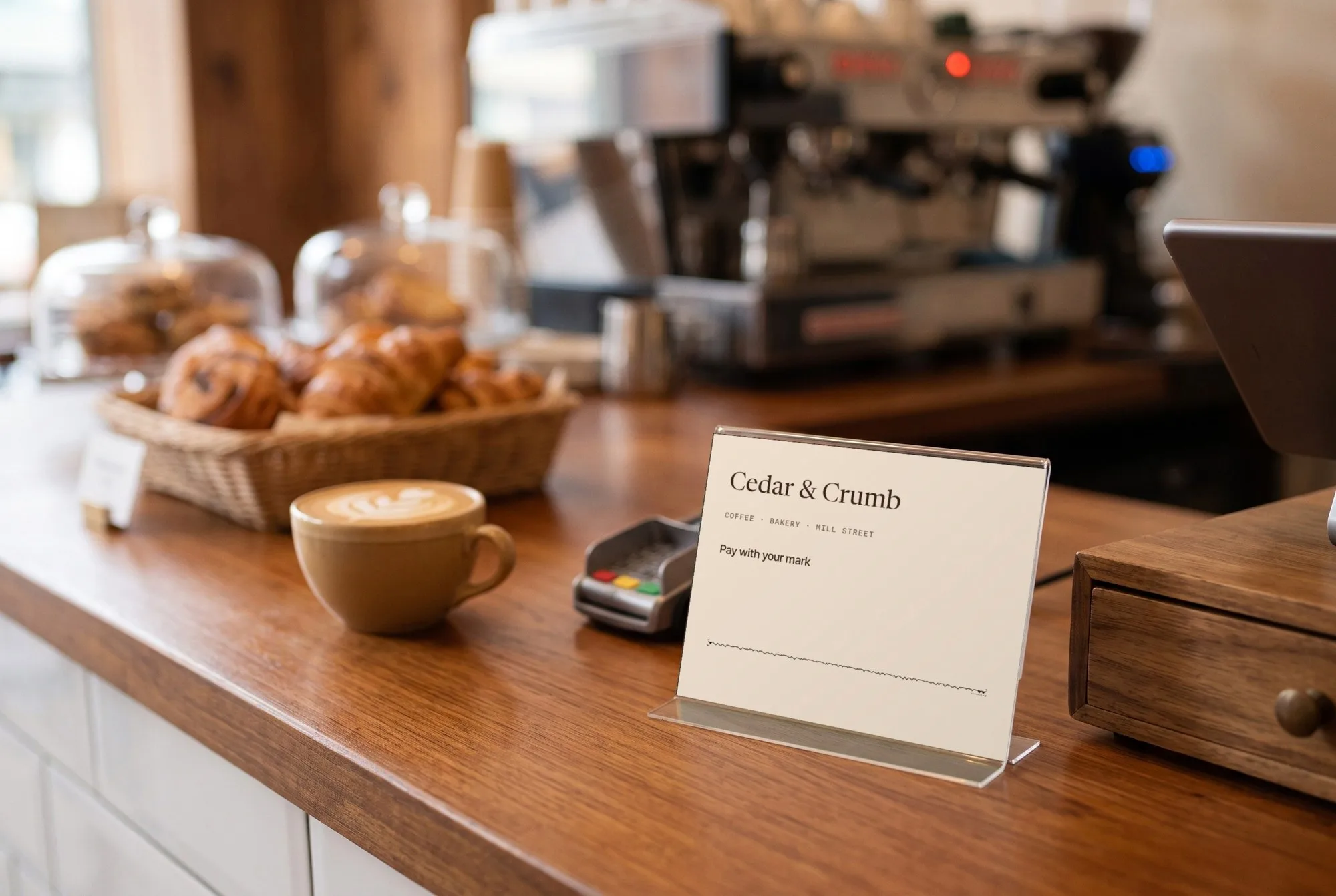
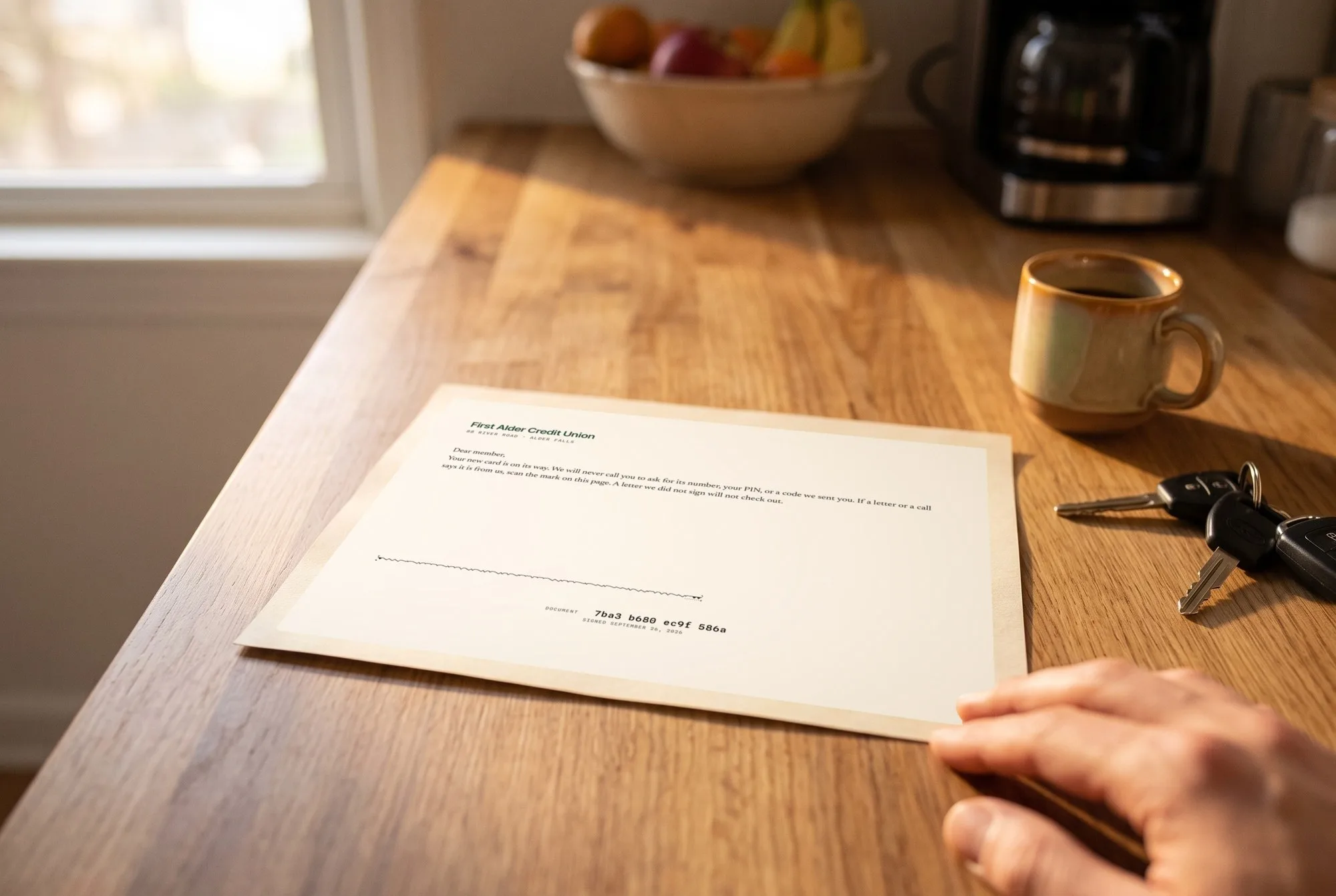

Staged samples. The marks are real. The scenes around them are made up.
Paying a store
Today your card number goes to every store you pay, and many keep it on file. With SigWave the store asks to be paid: this store, this amount, this once. You approve on your phone with Face ID. The money moves the way it does today, over the card network the store already uses, but your card number is never sent to the store, so there is nothing there to steal. We are building it with the first stores that want it.
"Was this you?"
Today a new login or a large transfer is confirmed with a text code, and a scammer on the phone can talk you out of it. With SigWave the service asks your phone: "Was this you?", in its own words, with a short code that matches its own screen. You confirm with Face ID or tap Not me. This works today; Synap's sign-in is built on it, and a bank would use the same thing for a transfer.
The call from "your bank"
Today anyone can call from any number and sound like your bank. Americans reported losing $3.5 billion to impostors in 2025, and people posing as banks caused the largest losses among scammers posing as businesses. With SigWave a call or a message from your bank carries your bank's mark, and your phone knows the difference. A caller without it is a stranger.
Opening an account
A bank has to know who you are, and SigWave does not change that. The law asks a bank to keep your name, birth date, address and taxpayer number, and a description of the document you showed. It does not ask for a photocopy. With SigWave your answers come from your phone, signed, with a receipt on both sides, and no copy of your license has to sit in a branch system.
Losing your phone
Your mark lives on the devices you hold. Remove a lost phone from another device and it can no longer act for you. Nothing about you has to be reissued.
Keep the answer, not the customer
Today a customer record holds a name, a birth date, a card on file and a home address, and every field is something you have to protect. With SigWave the record holds a handle that works only at your store, the customer's signed answers and a payment permission for your store alone. A thief who takes the table gets nothing that works anywhere else.
For a bank
A bank keeps what the law requires, and drops the rest: the license photocopies, the security questions, the text-message codes, and the customer who can't tell the bank's real call from a scam.
Why it pays
US organizations reported a record 3,322 data compromises in 2025, more in financial services than in any other industry. The average breach at a US company cost $11.5 million. Data you never held is not in the breach, not in the notice letters and not in the audit.
What works today
Sources: Identity Theft Resource Center, 2025 Annual Data Breach Report. Federal Trade Commission, June 2026. IBM, Cost of a Data Breach 2026. The bank rule is the Customer Identification Program, 31 CFR 1020.220.